
Who Owns a Norton Property? Start with the Address-to-Deed Route
Figuring out who owns a Norton property takes a few matched steps. Link the address to its parcel. Pull the assessment entry. Then check the name against the newest recorded deed. Norton publishes no public assessor owner-search form online. So the route combines the city map with office services. The tax roll names an owner of record. The deed shows how title passed. Many people search Norton property records by address to open that chain. Both documents reward that patience. Neither record proves who occupies a building. A matching name alone can attach you to the wrong parcel, so keep the legal description and recording reference beside the owner name at every step.
- Use GIS to identify the Norton parcel and note its map number and legal description.
- Request the assessment card or land-book entry from the Commissioner.
- Search the current roll name as a grantee through SRA or the shared Clerk.
- Compare the deed's legal description and recording date with the parcel.
Norton Property Owner Names Come from Different Records
Owner clues come from separate sources. The Commissioner maintains the owner-of-record roll. The Clerk indexes grantees on deeds. GIS locates mapped parcels, and SCC filings reveal a business entity's status and registered agent. The city describes a public assessment card, though its sample fields are not displayed online. The table separates those access routes from fields that remain unverified.
| Source | Owner information | Access and limit |
|---|---|---|
| Commissioner land book | Assessment owner-of-record entry | Card in person or by fax; no web search located |
| Shared Clerk deed index | Grantee and grantor on a recorded transfer | SRA access depends on local clerk |
| Norton GIS | Parcel location and any visible map details | Reference map; legal records control |
| Virginia SCC CIS | Entity status, registered agent, principal office, filings | Helps resolve a company name, not land title |
The assessment owner may receive tax notices at a mailing address different from the property's situs. Confirm identity with the parcel and deed description, never by name alone.
Where Norton Property Owner Information Is Kept
Norton keeps current assessment apart from the recorded conveyance. The Commissioner transfers the roll after a deed or will is recorded. Public sources do not state how quickly a particular entry updates. The Clerk's index supplies the filing trail, subject to the local image-access rule. GIS can match the record to the mapped tract. But a map label is not the deed itself.
| Source | Owner Info It Gives | Access |
|---|---|---|
| Commissioner / land book | Owner entry, if present on the requested card | Office or fax request |
| Clerk deed index | Grantee name and recorded transfer reference | SRA where locally enabled; Clerk counter |
| Virginia SCC | Entity status and business filing contacts | Online entity system; not title evidence |
| InteractiveGIS | Map location and identifiers available in viewer | Public map; terms and limitations apply |
An owner of record is not necessarily an occupant. A company can hold title while people live or work on the property. The listed mailing address may be somewhere else entirely. Use public property data to trace the parcel and its filings. Do not use it to guess who is inside. Do not reach someone through a location never offered for that purpose.
For the deed side, the shared Circuit Court Clerk's land-record office sits at 206 East Main Street in Wise. It serves Norton along with Wise County. Virginia's SRA portal may offer a local index if access is enabled. Norton's search fields, index cutoff, and image availability are not published. Call the Clerk at (276) 328-6111 with a grantee name and parcel description when an index or image is unavailable. Ask what reference a copy requires.
The Norton Commissioner Does Not Publish an Owner Search
The city's real-estate page has no web search fields. It describes an assessment card available at the office or by fax, plus land books open for in-person inspection. When asking staff to identify a roll entry, bring the street address and any parcel clue you hold. The map number format and exact card layout go unpublished, so ask which additional fields the office can retrieve and whether your year of interest is available. The Commissioner is at P.O. Box 347 and lists a main number of (276) 679-0031, with directory hours of 8:30 a.m. to 5:00 p.m. Use the office contact page for current service details. A land-book entry can name an owner of record, yet only the recorded deed shows how title was conveyed. The Commissioner directory listing supplies local contact information.
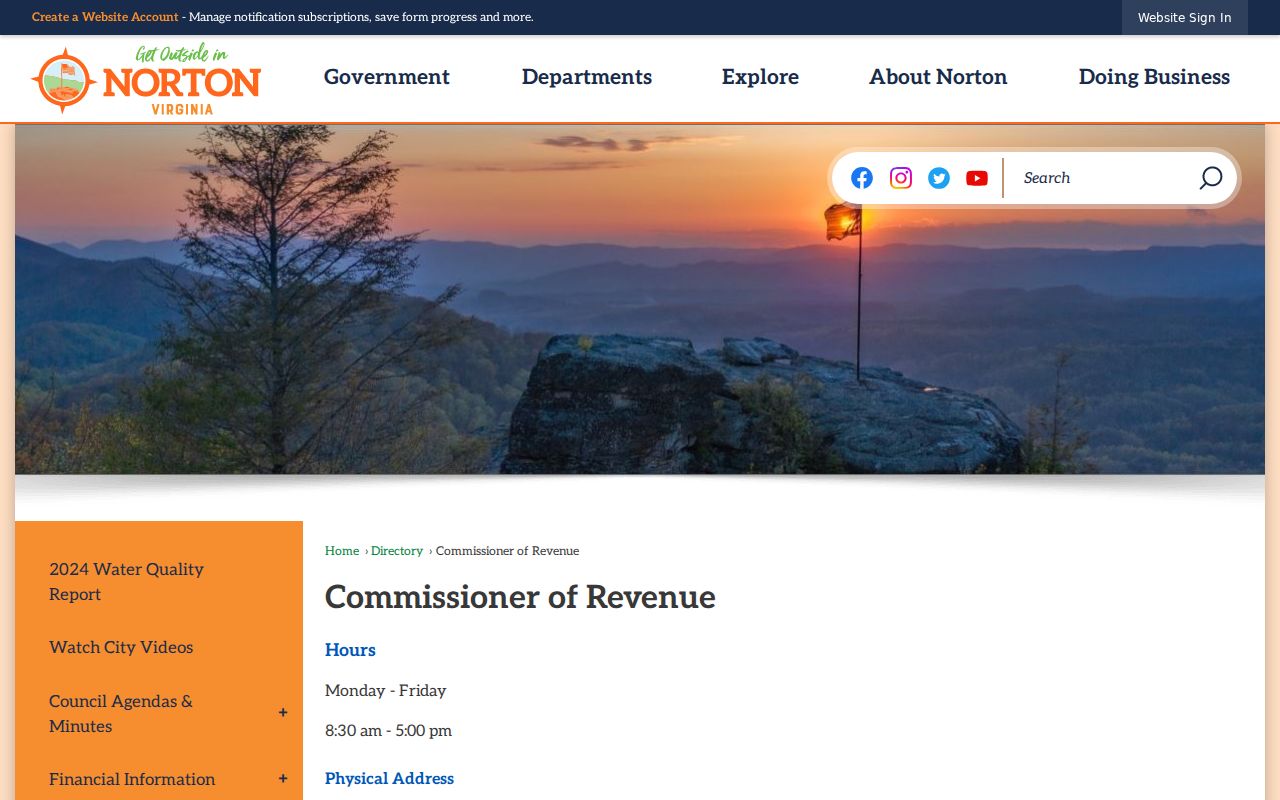
Skip the hunt for a public owner-name portal and request an assessment card from the Norton Commissioner by address or fax instead.
Confirm an LLC or Trust Name Behind a Norton Owner
A deed may name a corporation or LLC. Use the exact entity caption and compare it with Virginia SCC filings. The SCC Clerk's Information System shows entity status, registered agent, principal office, and filing history. Those details help distinguish similarly named businesses or explain a trustee's role. A registered agent, though, is not automatically the property owner. The entity record does not establish title. Trusts may be indexed by trustee, fiduciary, or trust caption. An estate transfer may sit under the decedent or the executor. Search each name as it appears on the deed and probate record. Keep the parcel's legal description in view. That way a company holding several properties is not matched to the wrong tract. The Virginia SCC business system is the official source for entity filings.
Entity records help untangle a name; the Clerk's deed settles the land interest.
A Norton Mailing Address Does Not Prove Who Owns the Parcel
Two addresses can sit behind one Norton parcel. The GIS map and the assessment roll track the physical situs, while the tax notice travels to a mailing address the owner names. A Norton postal address proves nothing about city limits. ZIP geography and municipal boundaries serve different purposes. Older deeds may even caption a tract as Wise County land, because Norton expanded its territory over time. Confirm the tax jurisdiction with the Commissioner and the recorded property with the Clerk.
Ambiguity calls for a wider comparison. For a parcel near the city line or one with a changed street number, line up the parcel location, map number, legal description, and recorded instrument. Ask which side holds the tax account, Norton or Wise County. Never settle that question from a mail label. The assessment roll, not the envelope, identifies the locality.
Norton's borders have shifted repeatedly. It began as a town in 1894 and became a city in 1954, with territory changes in 1950, 1962, and 1974. The 1974 transfer alone moved about 3.6 square miles from Wise County into the city. A deed recorded before an expansion can carry the older county caption even though today's assessment sits with the Norton Commissioner. Use the historical label to widen the Clerk search, then let the current map and tax locality identify the office holding the present assessment.
An owner lookup works best when two records agree on the same parcel, its legal description, and its recorded date. Match the assessment entry to the deed. A shared name alone is thin proof. One entity may own several tracts, or a similar name may appear elsewhere in the shared index, so trust the matched records rather than the name.
Who Owns This Norton Property Is Not the Same as Who Lives There
The records name ownership interests, nothing more. Norton's assessment roll and deed records show who holds a recorded interest in a property. They do not confirm who lives there. An occupant, guest, or relative can appear at an address the owner never held. Virginia's Address Confidentiality Program also gives eligible victims a substitute address. Other records are protected by statute.
Do not try to reverse a protected address. A mailing address is never permission to approach someone. For a lawful question, rely on the custodian's record. A title professional or the appropriate office can help too. A records match suits title research, house history, boundaries, tax review, and civic purposes. Keep the record's date and limits in mind.
What a Norton Owner Lookup Cannot Establish
A Norton owner lookup has limits. It does not show everyone who uses a property. It is not a title search. Assessment cards can lag behind a recorded deed. A company or trustee may hold title, and the map may not be current. Compare the actual deed, parcel description, and land-book entry before trusting the name.
Lawful use. Use Norton owner information for property research and civic purposes. Do not use names or addresses to stalk, harass, threaten, or intimidate anyone.