
Norton Deed Records and the Instruments Behind a Transfer
A recorded deed proves a conveyance happened. Its legal description can be compared against the parcel under study. That comparison confirms you have the right land. The shared Wise and Norton Clerk records other land instruments too. Treat the table as a checklist. The portal menu does not show which search categories the Clerk has enabled for Norton. Confirm them before relying on it.
| Deed Type | What It Does | Common Use |
|---|---|---|
| Deed | Records a transfer and legal description | Trace a grantee or prior grantor |
| Deed of trust | Records a security instrument | Check later assignments and satisfactions |
| Assignment or satisfaction | Shows a later change or release | Follow a recorded loan instrument |
| Plat or easement | Defines recorded lot and access interests | Compare legal boundaries and rights |
| Executor or trustee deed | Can convey property through an estate or trust | Match fiduciary authority and parcel |
A deed and a deed of trust are not the same thing. A deed conveys an interest in land. A deed of trust secures an obligation. The same land-record system holds assignments, releases, certificates of satisfaction, judgments, powers of attorney, covenants, and foreclosure deeds. Index labels vary by locality. Ask the Clerk which document-type names the Wise and Norton index uses before assuming a filing type.
Norton Deed Records Are Kept by the Shared Wise and Norton Clerk
One office serves two localities. The Wise County/City of Norton Circuit Court Clerk keeps land records for both Wise County and the City of Norton. The counter sits at 206 East Main Street in Wise, Virginia. Weekday hours are 8:00 a.m. to 4:30 p.m. The Clerk also handles probate, judgments, marriage licenses, and court records. Norton has no separate city recorder counter. Naming both Wise County and Norton on a deed request helps staff find the right index.
The office's public page confirms its land-record role but publishes no online cutoff year, image fee, or local copy schedule. Call ahead about the public terminal, archived books, certified copies, and large plat costs. A book/page reference shortens any counter request.
The Clerk's office page provides contact and location information.
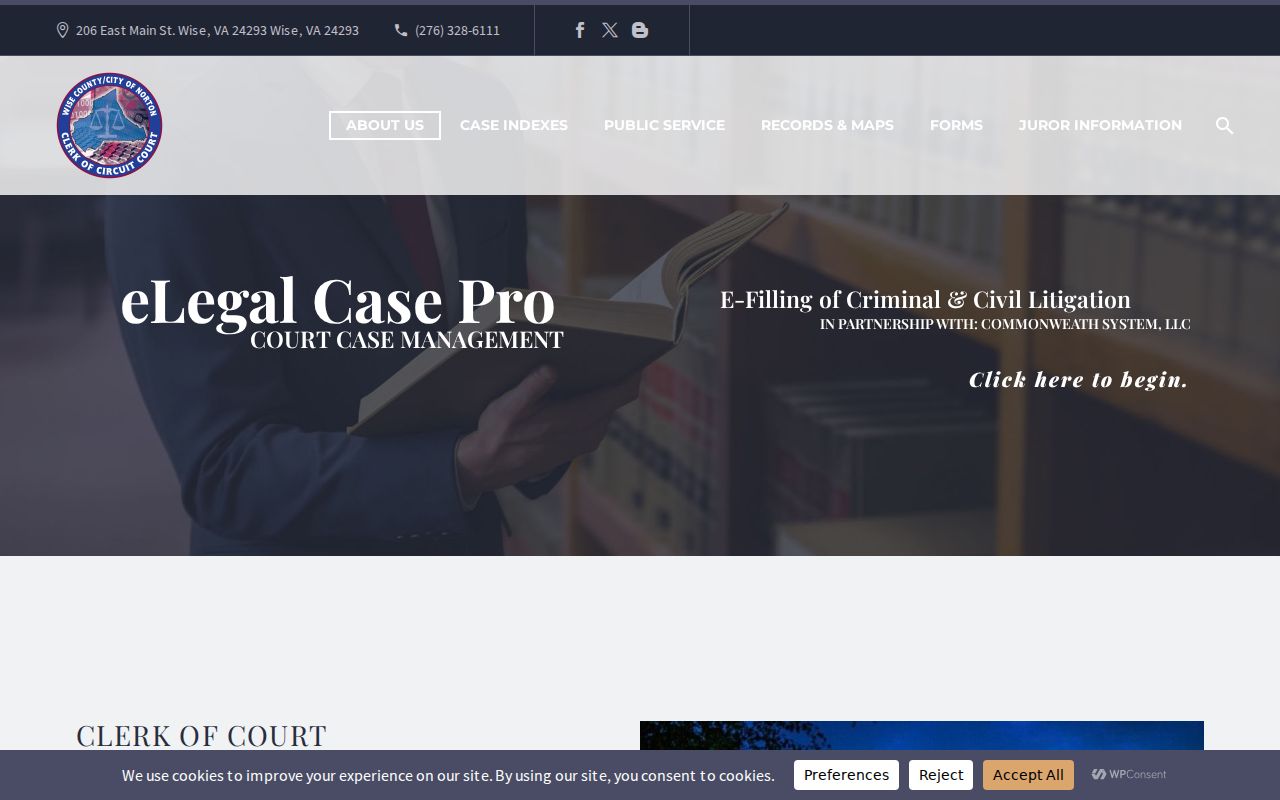
Even when the tax account sits inside the independent City of Norton, the shared office remains the recording custodian. Deed records stay in Wise.
Work Back through the Norton Deed Records Index
Start from the latest grantee deed you can identify. Read both parties. Keep the legal description beside the names. Search the prior grantor as a grantee, then compare the next instrument's lot, acreage, town or district, and recording reference. This method beats following names alone, because companies, trustees, and family members can share similar captions. Work backward one link at a time.
For a platted lot, carry the subdivision or plat name, lot, and block from deed to deed. For a metes-and-bounds tract, keep the calls and acreage exactly as written rather than substituting a map measurement. Note every exception, easement, and earlier book-and-page reference. A GIS map helps you locate the land. It cannot rewrite the description in a recorded conveyance. When two deeds disagree on acreage or wording, ask the Clerk for both instruments and let a title professional reconcile the chain. A clean chain is the goal.
- Find the latest deed and record the grantee, grantor, date, and parcel description.
- Search the grantor as a prior grantee in the land-record index.
- Compare the legal description and book/page or instrument reference.
- Ask the Clerk about older volumes when remote access ends.
- Grantor
- The party conveying the recorded interest.
- Grantee
- The party receiving the recorded interest.
- Chain of title
- The sequence of conveyances that can be tied to the same land.
- Book/page or instrument
- A clerk's reference for retrieving a filing.
Norton Deed Records in SRA Need Local Clerk Authorization
Virginia's SRA system is a statewide route. Local access still depends on the Clerk, who must enable index searching for the locality and approves image subscriptions. The state's current description says index-only use may be free where enabled. Images go only to users the individual Clerk approves. The public SRA pages publish no Norton cutoff year.
When a search lands on an index entry, save the party names, document type, date, and instrument reference. Then verify how to view or purchase the image. If a document is not visible, contact the Clerk in Wise. Ask about counter access or a copy request. The state page describes the general access model. See the Virginia courts SRA page for the statewide access rules rather than a Norton deed result.
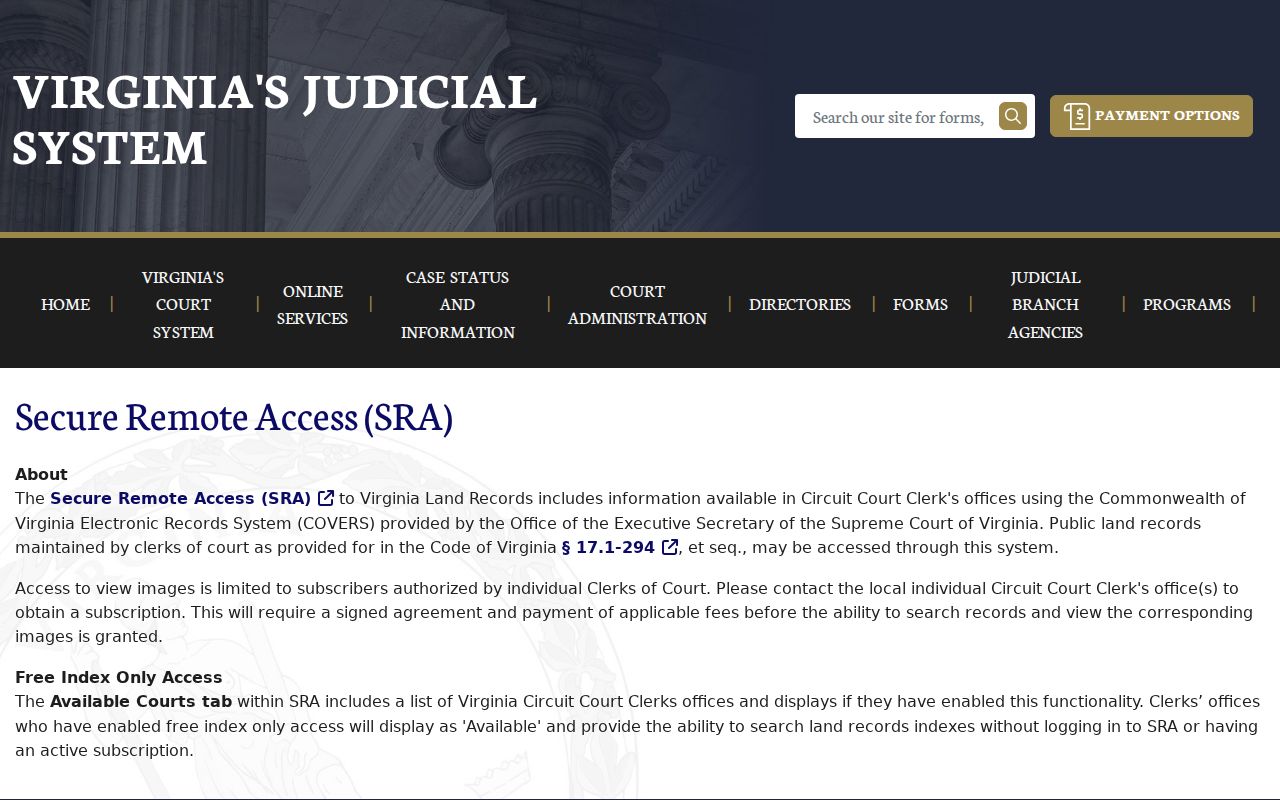
Confirm Norton access with the local Clerk first. An online index is not a full deed copy, so ask what the Clerk enables before counting on it.
The Virginia SRA land-record entry point is where to check whether Norton/Wise locality access is enabled.
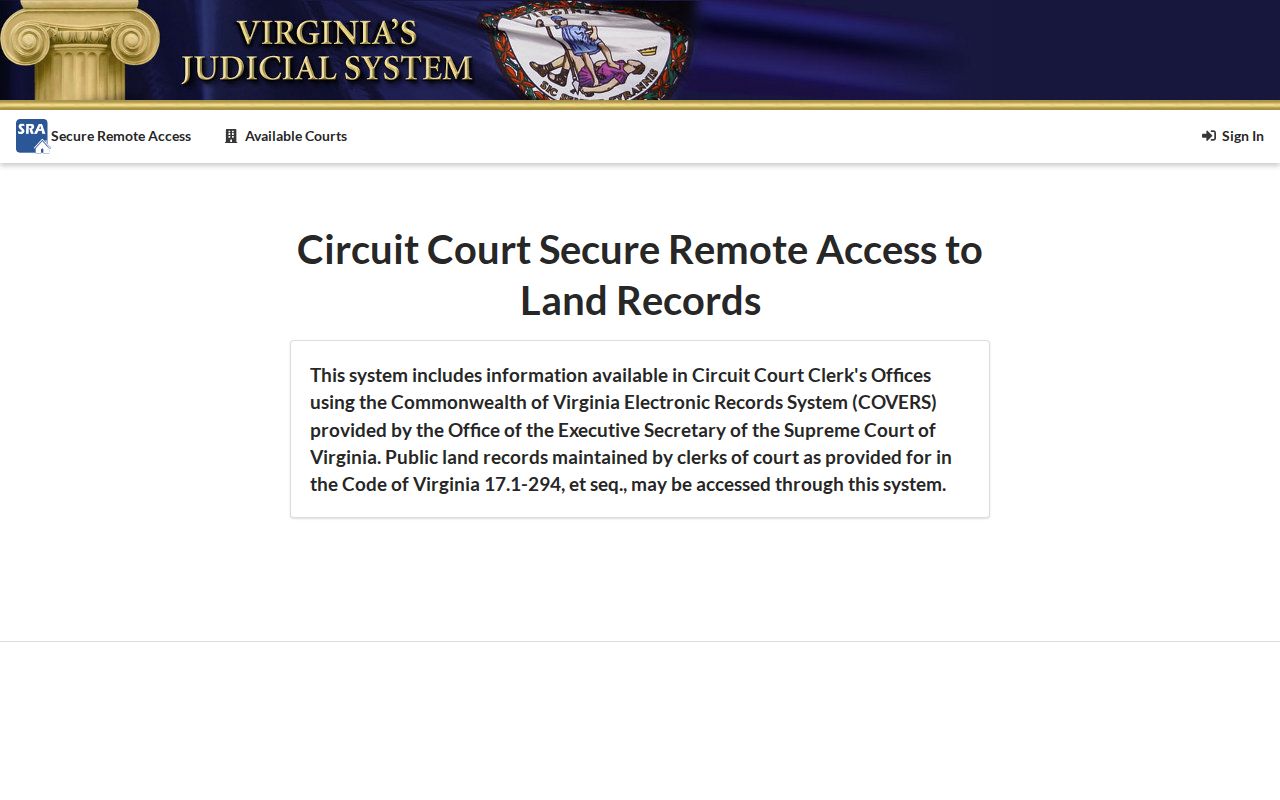
This portal screen identifies the statewide route only. Norton's index range and image permissions still rest with the local Clerk.
Fields to Confirm in a Norton Deed Search
The local search form is not published online. So treat these fields as questions for the Clerk. A focused request begins with identifiers that bind one name to one instrument and one parcel.
| Field or reference | How it helps | What research confirmed |
|---|---|---|
| Grantor and grantee | Trace one transfer or chain | Index field labels not exposed |
| Document type and date | Narrow a party-name match | Local filters not verified |
| Instrument number | Request an exact filing | Ask the Clerk which reference is used |
| Book and page | Retrieve historic volumes | Used in the LVA book sequence |
| Legal description | Separate similarly named properties | Read and verify on the deed image |
Norton Deed Records Reach Back to 1856 in Microfilm
Wise County Deed Book 1 opens the story. It covers 1856 through 1866, and its index is unpaged. The Library of Virginia catalogue then lists Books 2 and 3 for 1866-1874, Book 4 for 1874-1878, and Book 5 for 1878-1882, with many later volumes beyond them. This is the earliest official land-record sequence for the Norton area. It matters because Wise County was formed in 1856 from Lee, Russell, and Scott. Any chain reaching earlier than that year requires the predecessor county's records instead.
Some microfilm reels are marked for interlibrary loan. ARVAS also describes Wise records transferred from roughly 1850 to 1980, spanning land, tax, court, fiduciary, business, and marriage materials. That collection fills 22 boxes. No restrictions are listed, and nothing from it is online. These archives can cover a period the current portal may not reach. Even so, the Clerk's recorded instrument remains the title source of authority.
The unpaged index for Book 1 has a practical effect. A researcher may need to browse the finding aid and reel sequence rather than request one printed index page. Books 2 through 5 narrow the early chronology nicely. Still, they cannot prove a parcel was first conveyed in the first book where the current owner's name turns up. Follow both grantor and grantee entries. Keep a written list of every reference. If the chain runs before Wise County's 1856 formation, identify the predecessor county named in the earliest instrument before ordering film or archive material.
The Library of Virginia finding aid lists the books and the full reel sequence.
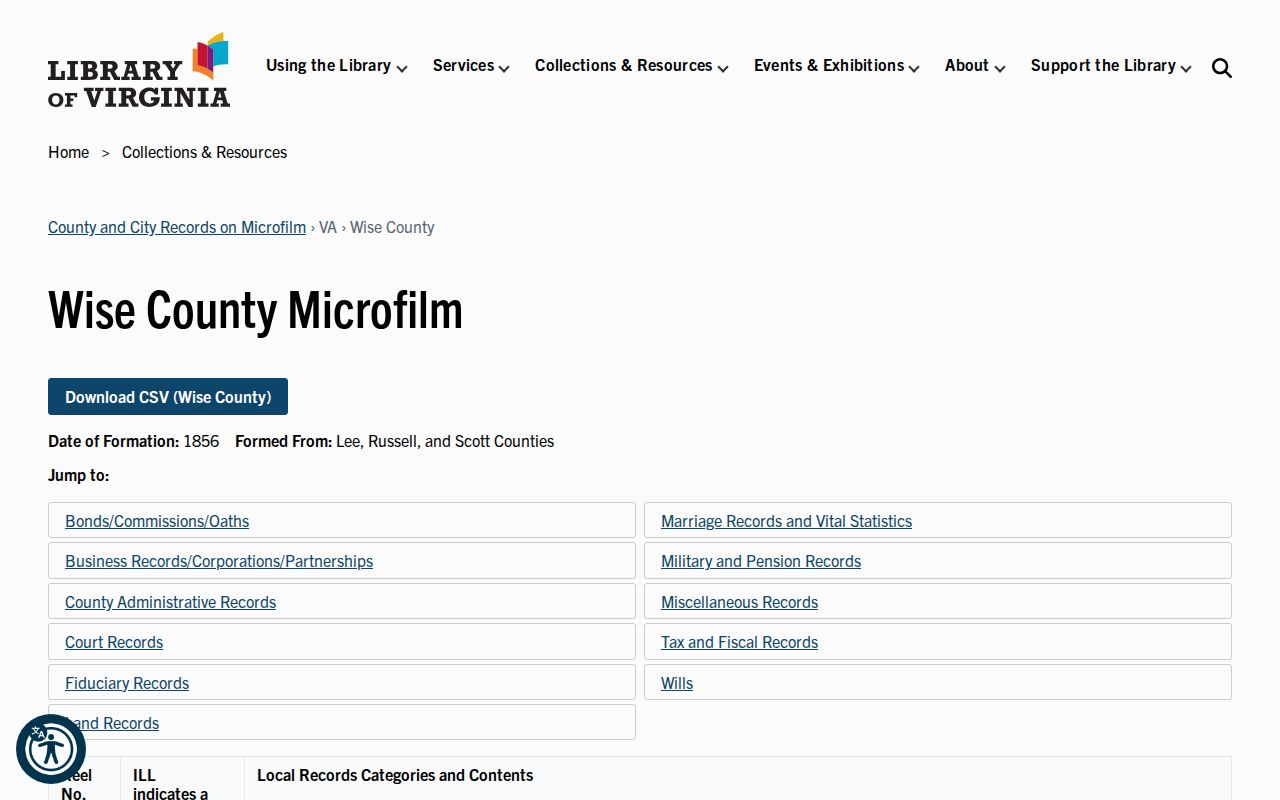
Work the title chain first, then order the right book and page from the film reel.
Estate and Trustee Transfers Can Interrupt a Norton Deed Chain
A name chain can shift when land moves through an estate or trust. Probate of wills and estates sits with the shared Clerk, and the land records may hold executor, administrator, trustee, or court-sale conveyances. Search the decedent and fiduciary captions too. Do not stop at the last owner of record. A probate file can show who held authority to sign, yet the recorded deed and its legal description are what tie the transfer to the parcel.
Death records work differently. Current Virginia death certificates are generally restricted for 25 years under Va. Code section 32.1-271, while probate files and recorded land instruments follow their own public-access rules. Never infer ownership from an obituary or a probate caption alone. Ask the Clerk which will-book years and case materials exist. The office publishes no local online cutoff or fee schedule, so those details come directly from the Clerk.
Requesting a Copy of a Norton Deed
Try SRA first if a local index is available. Save the party names, record date, document type, and the book/page or instrument number. Then ask whether an image can be viewed under the current access terms. The record may fall outside the searchable range. An image may also be restricted. In that case, contact the Clerk's office in Wise. The directory lists its address, phone, email, and weekday counter hours. The public page publishes no local copy fee and no mail procedure.
Clarify what you need before paying. Ask whether an uncertified reproduction will do, or whether you need a certified copy. Ask how to pay. Large plats sometimes carry a separate charge. A portal subscription can carry one price. A printed copy at the counter can carry another. Certification can have its own terms too. Finally, make the request specific. Separate the Norton parcel from another filing under the same owner name.
Recorded, not guaranteed. The Norton deed index shows filed instruments, not whether title is clear or whether an unrecorded claim exists. A title professional must review the chain before a transaction relies on it.