
What Norton Property Tax Records Separate
Assessment and collection sit in separate Norton offices. The Commissioner of Revenue assesses Norton real estate, keeps the parcel record, and builds the annual land book. The Treasurer collects the resulting bill. A value entry and a payment account answer different questions, and the city publishes no public tax-bill search.
| Field | What It Shows | Where |
|---|---|---|
| Assessment | Value carried on the local real-estate roll | Commissioner of Revenue |
| Assessment date | January 1 each year | Commissioner of Revenue |
| Relief or exemption | Programs are listed by the city; rules require confirmation | Commissioner's office |
| Bill and payment | Amount billed, receipt, or delinquency status | Norton Treasurer |
| Rate and due dates | Current posted rate and collection calendar | City tax page and Treasurer |
Virginia law requires real estate to be assessed at 100 percent of fair-market value. Even so, an assessment is a tax record. It is not an appraisal for one sale. A bill can also carry relief or exemptions that change the amount due without touching the parcel's recorded deed. Check the assessment with the Commissioner. Check the calculation and payment with the Treasurer.
The posted rate lets you test the arithmetic. At $0.90 per $100 of assessed value, a $100,000 assessment produces $900 in tax before any relief or adjustments. That is a calculation, not a bill. Ask the Treasurer to confirm the actual charge for the tax year and whether a payment or credit has posted. Ask the Commissioner if the assessment itself is the problem.
Norton Property Tax Records: Assessment Cards and Land Books
The Commissioner assesses land and buildings as of January 1, handles subdivisions, new construction and additions, maintains the parcel record, and transfers the local roll after a deed or will is recorded. Norton reassesses every four years. The city's assessment FAQ says a card can be obtained at the office or by fax, and that land books are open for public use there and at hearings.
No online owner/address form or exact card layout was located. Ask for the card by street address, owner, map number, or legal description, then confirm which fields it includes. The research did not visually capture a sample card, so separate land value, improvement value, exemptions, sale date, and transfer history should be described as fields to ask about, not as guaranteed output.
The Norton real-estate assessment page describes the office and reassessment cycle.
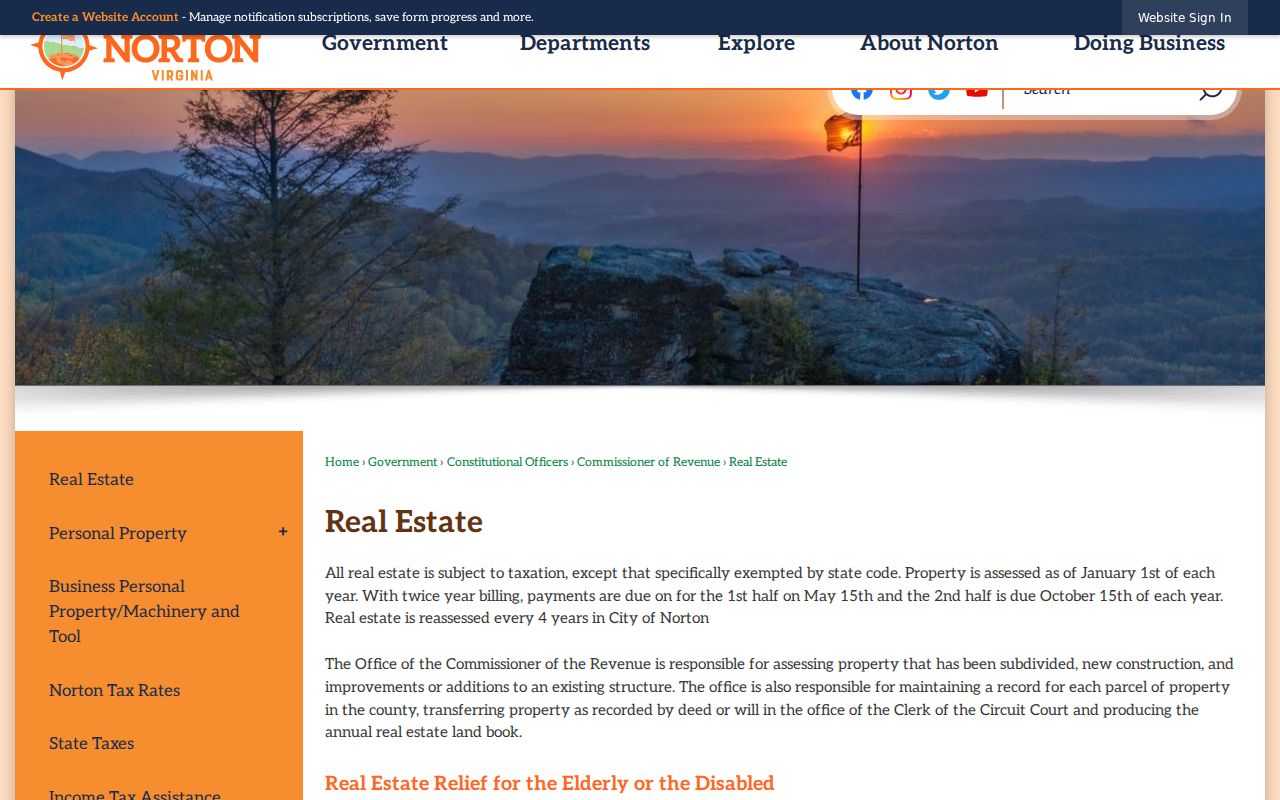
The Commissioner handles value questions first. The Treasurer collects the tax bill but does not set the assessment itself.
Norton Property Tax Records: Bill and Payment Requests
The Treasurer collects real-estate tax. The office publishes no online bill search. Request a duplicate bill, payment history, delinquency status, or tax-sale information using the parcel or map number. Note the date of your inquiry, since a balance can change after the account is checked.
- Identify the Norton parcel and write down its map number or legal description.
- Contact the Treasurer and request the bill or account status for a stated tax year.
- Ask for the payment history or duplicate bill if the question concerns a prior receipt.
- For assessed value or relief eligibility, ask the Commissioner rather than assuming the Treasurer can change the roll.
- Assessed value
- The valuation carried on the local assessment roll.
- Tax rate
- The city's stated charge applied per $100 of assessed value.
- Relief program
- A city-listed exemption or relief route whose current rules must be confirmed with the Commissioner.
- Delinquency
- An unpaid tax account status; it is not, by itself, a deed transfer.
Norton Property Tax Records Follow Two Annual Due Dates
Norton real-estate tax runs on two due dates, May 15 and October 15. The posted rate is $0.90 per $100 of assessed value. Those dates belong to the collection calendar. The Commissioner owns the assessment record. The city's tax page directs assessment questions to that office. There is no online tax-bill lookup or public payment-history screen.
Comparing a bill with the roll takes care. Confirm the tax year, account identifier, assessment, and any relief shown. Ask the Treasurer whether a payment has cleared. Also ask whether penalties or other charges are included. Never infer current status from an old printed bill.
Historical Norton finance material lists citywide real-estate assessed totals of $218,737,522 for fiscal 2015. The totals were $225,828,836 for 2016 and $235,070,000 for 2017. The direct tax rates then in effect differed from today's $0.90. The citywide totals set helpful context. They are not current parcel values or balances. Always match a bill to its parcel and fiscal year. Never carry a past rate forward.
The Norton tax page publishes the rate and the due dates.
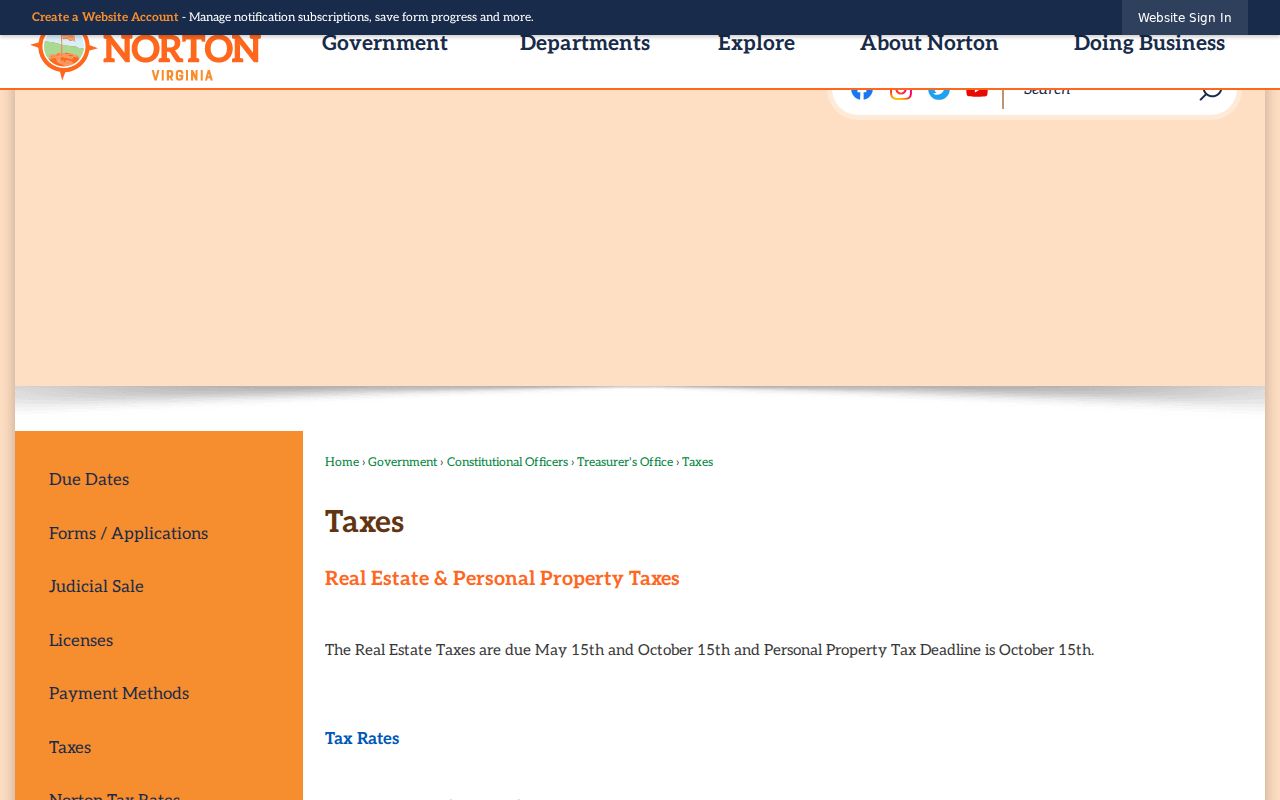
Treat the posted schedule as a starting point. Then confirm the parcel's balance directly with the Treasurer.
The Norton Treasurer Collects but Does Not Assess
The city's real-estate tax page sends value questions to the Commissioner of Revenue. The Treasurer receives payments and keeps collection records. The office sits at 618 Virginia Avenue NW. Hours are 8:30 a.m. to 5:00 p.m. on weekdays. It also collects fees for building, electrical, plumbing, heating, and sign permits. Those duties do not make the Treasurer the custodian of permit approvals or assessment decisions.
For a payment question, name the parcel number or legal description and the year involved. Ask for a duplicate bill, a receipt, account history, or delinquency information. The city offers no online lookup. Visit or call the office directly.
The city's Treasurer page lists collection duties and office access.
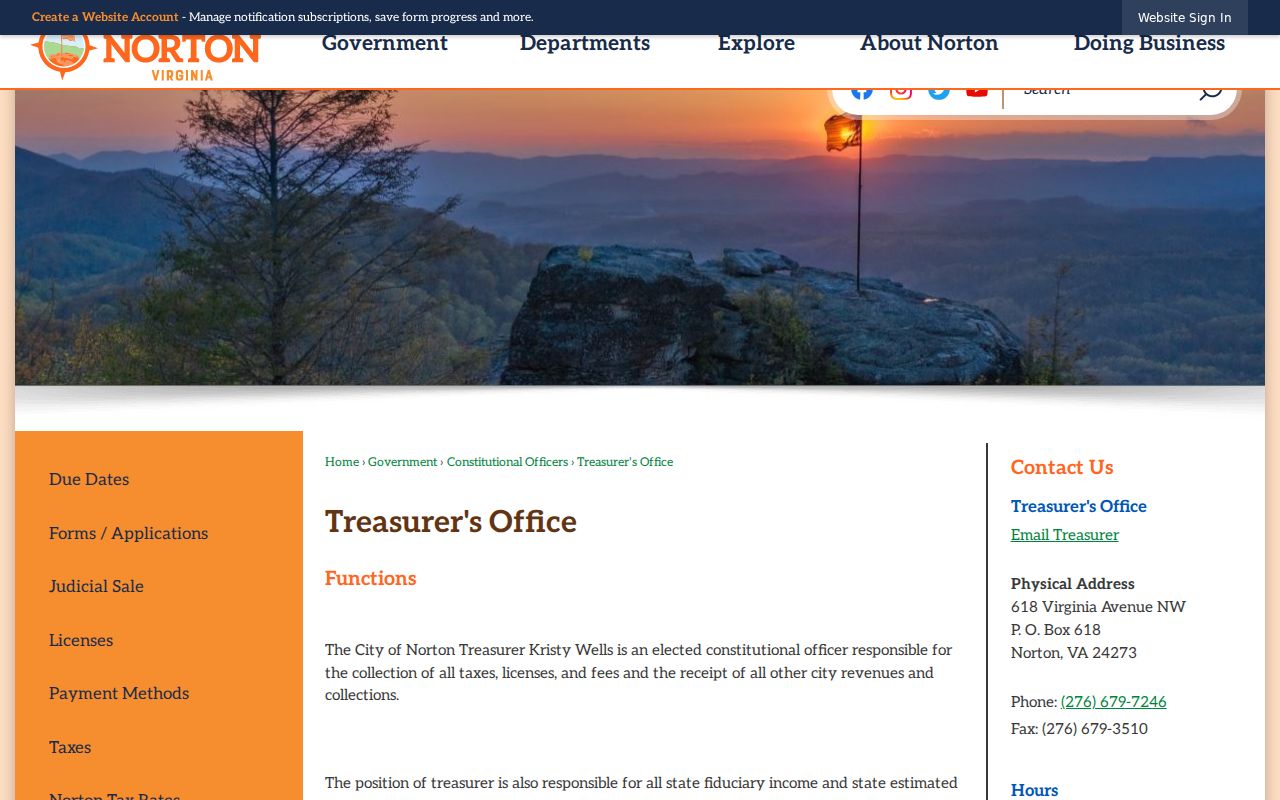
Keep payment confirmation with the bill for the same tax year and account.
Norton Property Tax Records: Relief and Exemptions
Norton's real-estate page lists tax-relief programs. It publishes no eligibility chart, application deadline, or evidence checklist. Never assume a program's rules. A relief name that fits another Virginia locality may not fit a parcel here. The Commissioner can confirm the current criteria, any age or disability requirements, the filing window, and renewal rules. The office can also confirm the right form.
Relief changes the amount owed on the bill. It does not rewrite the deed or prove any change of ownership. A property owner reviewing a notice should keep three papers together: the assessment card and the relief decision. The Treasurer's bill completes the set. That way a value question never gets confused with a collection question.
Assessment Reviews Start with the Norton Commissioner
A value concern starts with the Commissioner. Ask how a current assessment is reviewed. Ask how a Board of Equalization hearing gets scheduled. The land book is open for public inspection at the Commissioner's office and at hearings. The office publishes no filing deadline, board calendar, or evidence standard, though. Get those details directly before relying on any appeal timeline.
Good preparation helps. Organize the parcel or map number, the assessment card, and the recorded deed description. Add comparable property information if the office accepts it. Norton's four-year reassessment cycle does not force an owner to wait out an error. It also sets no deadline for review. The Commissioner remains the source for the correct current procedure.
Confirm the current review route. Norton directs assessment questions to the Commissioner of Revenue. Ask which review or Board of Equalization steps apply and what filing dates are in force for the current tax year.
Norton Property Tax Records: Delinquency Does Not Transfer Title
An unpaid bill is a collection status. It is not proof that a lender or purchaser owns the land. The Treasurer can supply an account balance or tax-sale information. Later recorded instruments appear in the Clerk's land records. These include a foreclosure deed or purchaser deed. Norton publishes no tax-sale list, no online delinquency search, and no current redemption procedure.
A tax account may hint at a sale or lien. Ask the Treasurer what public notice or account record exists. Then check the Circuit Clerk's index for the related filed instrument. Match the legal description and parcel number at every step. An overdue bill alone never shows that ownership changed.
A request for payment history should name the account and the tax years. For a city-held administrative record unavailable online, Virginia FOIA may open a request route. Name the existing document, the preferred format, and the relevant period. Ask the custodian for an estimate if search or copy charges could apply. Court land records follow the Clerk's own access process. Use that office for the recorded deed side of any delinquency question.
Reviewing a Norton Assessment
An assessment concern starts with the Commissioner. Ask how to request a review or a Board of Equalization hearing. The published materials state no deadline, hearing calendar, form, or evidence rule for appeals. Confirm those details with the office for the tax year at issue.
Appeal window. Ask the Commissioner for the current filing date and review steps. The four-year reassessment cycle is not a substitute for the current appeal schedule.