
Norton Former Owners across the Record Eras
The local SRA index publishes no starting year. Treat any online cutoff as unknown rather than assumed. Wise County's official deed-book sequence begins with the county's formation in 1856, and the earliest land instruments appear there. Other regional holdings help. Tax roll entries, court files, fiduciary papers, and family context all enrich a chain, but none replaces the Clerk's recorded deed as evidence of title.
| Source | Years It Covers | Where Held | What It Shows |
|---|---|---|---|
| Wise/Norton Clerk land records | Local online cutoff not located | SRA and Clerk counter in Wise | Recorded transfers and legal descriptions |
| Wise deed books | Book 1: 1856-1866; later books follow | Library of Virginia microfilm guide | Earlier deeds and chain references |
| ARVAS Wise collection | About 1850-1980 | Finding aid; 22 boxes, no items online | Land, tax, court, fiduciary and related series |
| Wise County Historical Society | Coverage varies by collection | Regional library and society materials | Local context, cemetery, rail, and family materials |
The Clerk's record governs the transfer itself. Different archives fill different gaps in a Norton property search. Use the Library of Virginia catalogue when a chain enters an older bound volume, ARVAS when a transferred county series may hold context, and the Historical Society when an old community name needs interpretation. Some local limits remain unposted. The office does not publish its SRA range, probate-book cutoff, or copy fees. Ask the custodian about access before assigning an exact endpoint to the online chain.
Norton Former Owners Are Traced from Grantee to Grantor
Start from a deed that names the current grantee. Then follow the previous grantor back through the Wise and Norton index. Search the exact party spelling. Compare the legal description every time. A result belongs to the chain only when the parcel description and instrument reference support the match, because a shared surname or street name proves nothing.
For each transfer, note the instrument type, recording date, grantor, grantee, and the book and page or instrument number. If SRA provides only an index line, use the Clerk's access route to read the deed image itself. Local index fields and date filters stay hidden. Ask the office how to search a particular period.
Norton Former Owners: Walk the Deed Chain Backward
A reverse chain links one deed to the conveyance before it. Start with the latest recorded grantee. The deed's grantor is the earlier owner. Then find the instrument that conveyed the same land to that grantor, using the legal description, book and page, or instrument number as a control. Keep a date and party list. That habit keeps a probate deed, a company transfer, or a boundary change from being mistaken for an ordinary sale.
- Find the latest deed and record its parties, legal description, and filing reference.
- Search the grantor's name as a grantee in the earlier index.
- Check that the next instrument describes the same tract or lot.
- Move to the Clerk's books or microfilm when online access ends.
- Grantor
- The party conveying the interest on a deed.
- Grantee
- The party receiving the recorded interest.
- Chain of title
- A sequence of conveyances tied to the same parcel.
- Legal description
- A land description that can persist when a street address changes.
Norton Former Owners in Wise Deed Book 1
The Library of Virginia's Wise County microfilm guide pins down the earliest volumes. Deed Book 1 covers 1856 to 1866. Its index is unpaged. Book 2 and Book 3 carry 1866 through 1874. Book 4 covers 1874 to 1878. Book 5 runs to 1882, with later land and court volumes beyond. Some reels circulate through interlibrary loan.
Wise County was formed in 1856 from Lee, Russell, and Scott counties. If an instrument predates Wise Book 1, look to the predecessor county. The state land record route is another option. Norton's city status creates no separate early deed series.
The catalogue offers a firm starting point for a parcel chain. Consult the Library of Virginia guide for the Wise volumes.
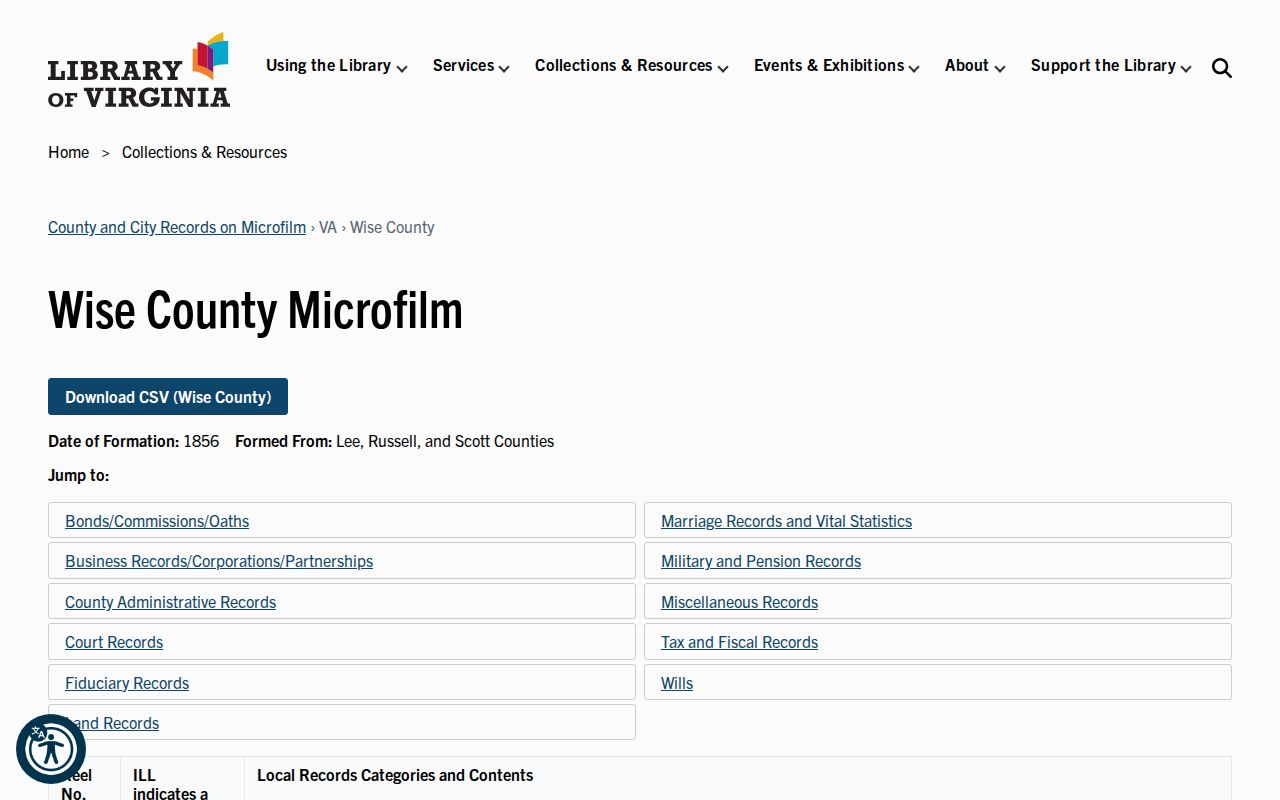
An unpaged index works differently from a modern name search. Follow the catalogue instructions for the reel that covers your period before paging through microfilm.
Norton Former Owners May Appear under Wise County
Norton became an independent city in 1954. Its territory changed several times along the way. A deed for land now inside Norton may still carry a Wise County description, because Wise was the jurisdiction when the document was recorded. The city's history marks a 1950 expansion. A 1962 annexation and a 1974 transfer of about 3.6 square miles from Wise County followed. The 1975 expansion added just 84 residents.
Use these dates to read a jurisdiction label, not to assume every parcel near the city edge moved at once. Check the legal description against GIS and assessment records. The charter also cites a 2004 boundary adjustment recorded as Land Instrument 200400372.
Norton Former Owners and Probate or Estate Transfers
An owner's death could move land in several ways. Executor deeds, administrator deeds, and court-approved sales all appear in the record. So do recorded affidavits, wills, and survivorship instruments. The shared Clerk handles probate of wills and estates. Search under the decedent, the fiduciary, the trustee, and the estate caption. Then locate the land instrument that names the parcel. A probate docket shows who held authority, though the caption alone never establishes a conveyance.
Death certificates are not title records. Virginia restricts current death certificates for 25 years under Va. Code section 32.1-271, while probate and recorded land instruments follow separate access rules. The Clerk publishes no local probate cutoff or copy fee. Ask which will books you can consult.
The Virginia Department of Health vital-records page explains the separate access rules for death records.
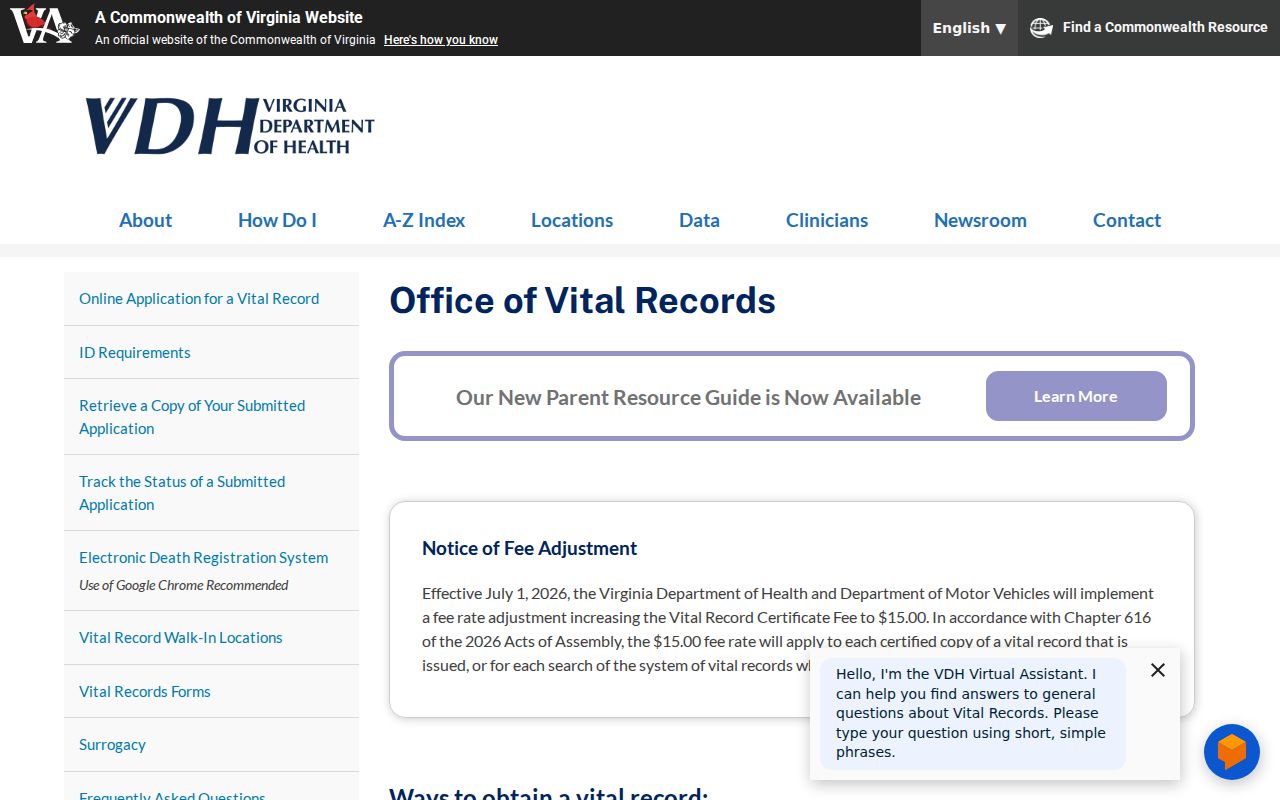
A vital record may explain a name or a date. It cannot transfer Norton land, so confirm any ownership change in the probate and recorded deed files.
Trustees and Company Names Matter in Former Norton Owners
Old Norton City deeds often name a trustee instead of a person. A company, executor, or other fiduciary can hold title too. Copy the caption exactly as filed. Then search that same entity in the grantee role while you work backward through the property records. Virginia SCC filings can clarify a company's legal name or registered agent. They cannot prove the entity owns a particular parcel. When a name changes or a company merges, keep the date and document reference for each link. A deed chain depends on every connection. Each party name must match the legal description of the land.
Norton Former Owners in ARVAS and Local Archives
ARVAS holds Wise County records spanning 1850 to 1980. The series cover land, tax and fiscal, court, fiduciary, election, business, and marriage records. Its finding aid lists 22 boxes. Access carries no restrictions, but nothing is online. The Wise County Historical Society reports more than 5,000 archival materials. These include family histories, ledgers, cemetery files, railroad records, photographs, and community papers.
These collections help when a deed cites an old route near Norton. They also help with a mining-era community name. Use them as leads. Then return to the Clerk's deed book for proof of the transfer. The archives publish no Norton directory years or reverse-directory coverage. The ARVAS Wise County collection guide describes its record groups and access conditions.
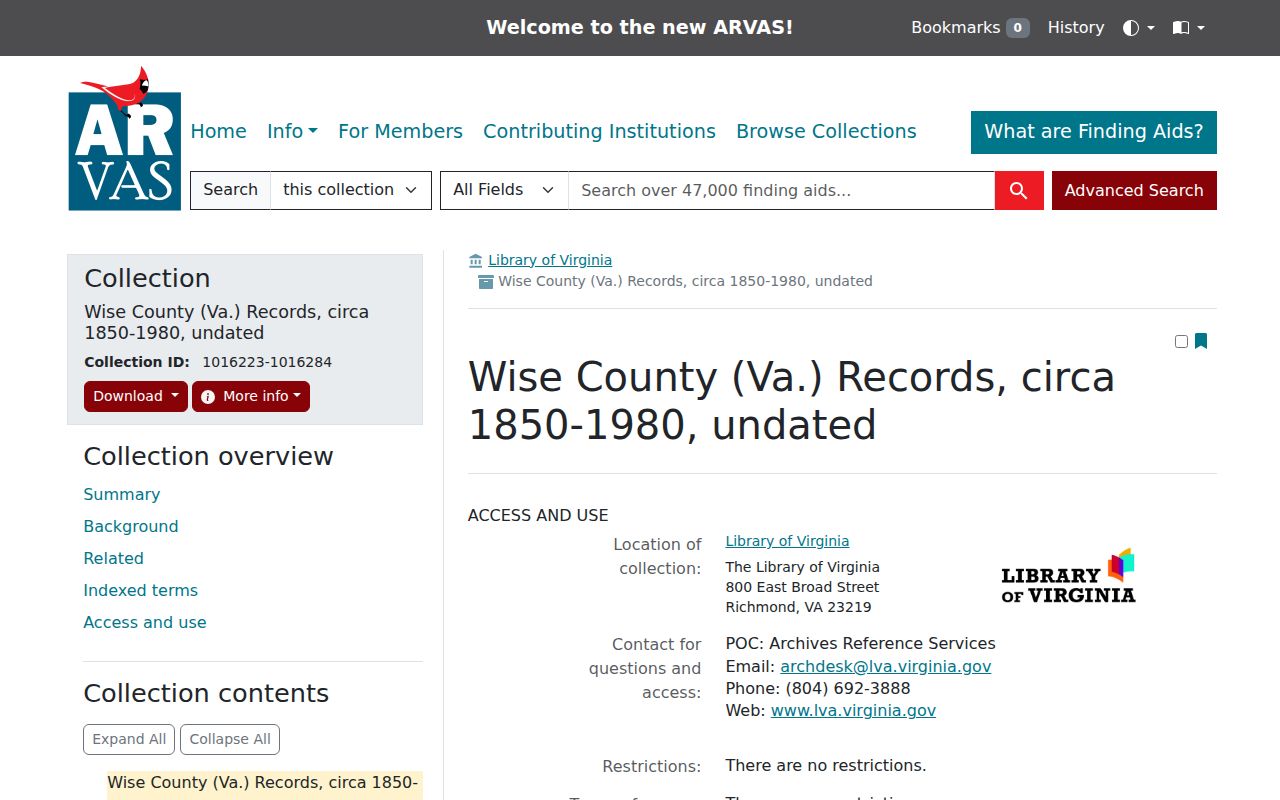
These materials supply context, not a searchable online deed. Read the collection description first, then request the box or series you need.
Norton Former Owners May Require Clerk-Approved SRA Images
Virginia's SRA runs on a split model. Some courts open free index-only access, while document images stay behind a clerk-approved subscription. The statewide entry screen shows no Norton search fields. No local coverage date appears there. The Wise/Norton Clerk's page is no clearer. It omits the online cutoff and any image-copy fee. Ask the office first which years you can reach and how to order the filed deed. Working backward through Norton property records, save each index result's date and book/page or instrument number. An index entry alone will not do. It lacks the full legal description needed to confirm the earlier transfer involves the same land. See the Virginia courts' SRA access page for the statewide terms.
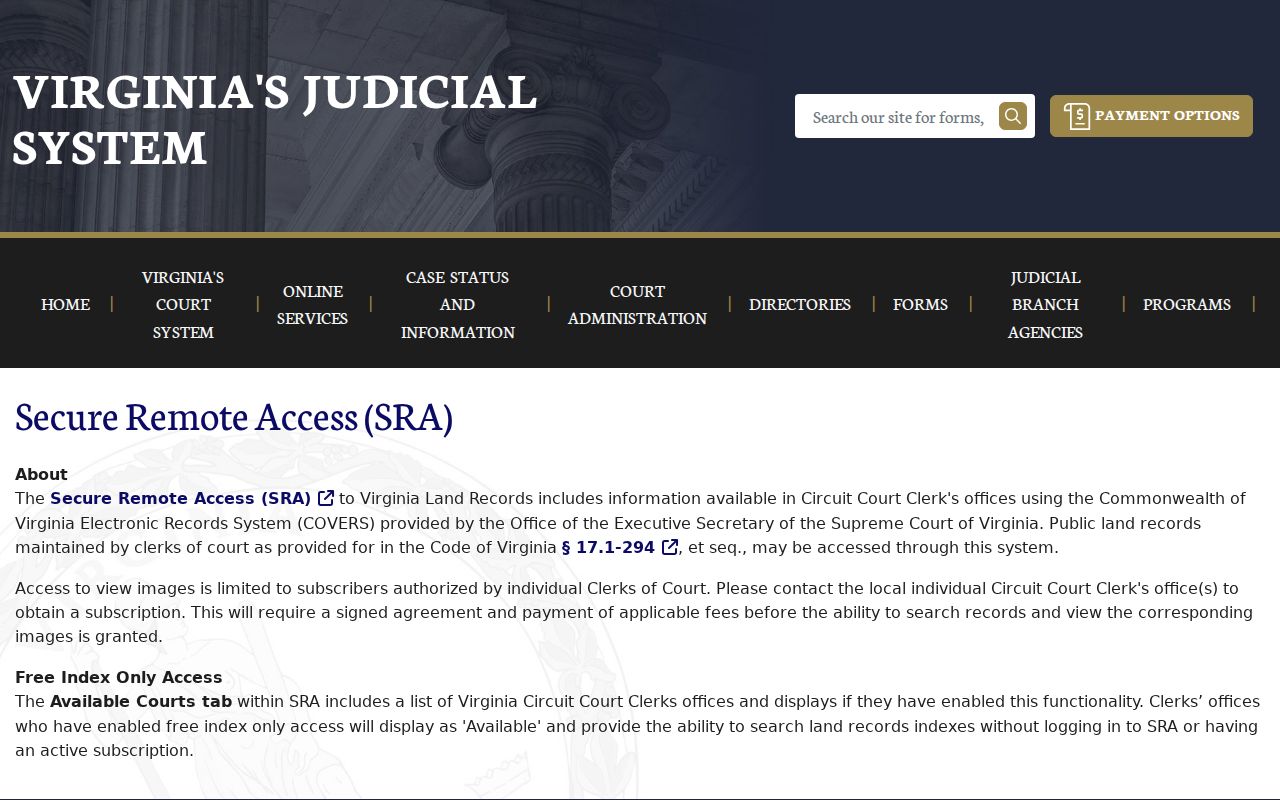
The Clerk's counter picks up where online access stops. SRA images there extend a former-owner search through book and microfilm deed records.
How Far Back Norton Former-Owner Records Reach
Norton's record trail runs deep. The earliest Wise deed books date to 1856. The Clerk publishes no local SRA cutoff and no complete online coverage range, so a digitized property search can end long before the paper trail does. No courthouse fire or digitization cutover marks a clean break in the chain of title. Confirm the chain's endpoint with the Clerk. For older parcels, the Library of Virginia microfilm guide and predecessor-county land records carry the owner-of-record search further back.
Lawful use. Research former Norton owners for title work, property history, or civic purposes. Do not use past-owner records to track, stalk, harass, or intimidate anyone.